
Welcome to Dr. Krishna Kumar M.S. – Robotic Joint Replacement Specialist
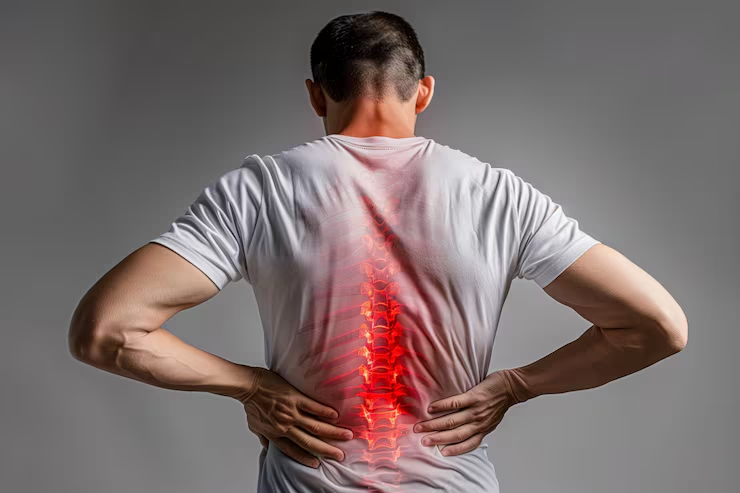
Spine & Back Pain Management

Spine and Back Pain Management - Dr. Krishna Kumar M S Whitefield Bangalore

Spine & Back Pain Management in Whitefield, Bangalore

Back pain is one of the most prevalent health conditions worldwide, affecting an estimated 80% of people at some point in their lives. In India, the rapid rise of sedentary desk-based work, long commuting hours, and reduced physical activity has driven a significant increase in back pain among working-age adults and young professionals. It is now one of the leading causes of disability and absenteeism from work globally.

Despite its frequency, back pain is not a single condition — it is a symptom that can arise from dozens of distinct causes, ranging from simple muscle strain that resolves within days, to structural problems such as disc herniation or spinal stenosis requiring targeted medical management. Accurate diagnosis is therefore essential before any treatment is prescribed.

As an orthopedic surgeon with expertise in musculoskeletal conditions, Dr. Krishna Kumar M S provides thorough clinical evaluation of patients presenting with back pain, identifies the underlying cause, and formulates an appropriate management plan — whether that involves structured physiotherapy, injection therapies, or co-ordinated referral to a spine specialist for surgical conditions requiring operative intervention. The goal is always to help patients recover function, reduce pain, and return to their normal activities as safely and efficiently as possible.

Common Causes of Back Pain We Evaluate & Manage

Understanding the specific source of back pain is the first step toward effective treatment. Dr. Krishna Kumar M S evaluates and manages the following common causes of back pain:

Muscle, Disc & Nerve Causes

  • Muscle Strain & Spasm (Most Common): Acute muscle strain from sudden lifting, twisting, or overexertion is the single most common cause of back pain. The paraspinal muscles go into protective spasm, causing severe acute pain that typically resolves within 2 to 4 weeks with appropriate rest, physiotherapy, and pain management.
  • Disc Prolapse (Herniated Disc): The intervertebral disc acts as a shock absorber between vertebrae. When the soft nucleus pulposus protrudes through a tear in the outer annulus fibrosus, it can press on adjacent nerve roots, causing radiating pain (radiculopathy) down the arm (cervical disc) or leg (lumbar disc), along with numbness and tingling in the corresponding distribution.
  • Sciatica: Sciatica is not a diagnosis in itself but a symptom — sharp, electric, or burning pain radiating from the lower back through the buttock and down one or both legs along the path of the sciatic nerve. Most commonly caused by L4-L5 or L5-S1 disc herniation compressing the nerve root, though it can also arise from piriformis syndrome or spinal stenosis.

Degenerative & Structural Causes

  • Lumbar Spondylosis (Degenerative Spine Disease): Age-related wear and tear of the lumbar vertebrae, disc spaces, and facet joints leads to osteophyte (bone spur) formation, disc height loss, and progressive stiffness. A very common finding on imaging in patients over 40 years, often causing chronic lower back pain worsened by prolonged standing or sitting.
  • Facet Joint Arthritis: The small synovial facet joints at the back of the spine can develop osteoarthritis, causing localised deep back pain that is typically worse with extension (bending backwards) and improved with flexion (bending forwards). Facet joint injections with local anaesthetic and steroid can both diagnose and treat this condition.
  • Spinal Stenosis: Narrowing of the spinal canal due to disc bulging, ligamentum flavum hypertrophy, or bony overgrowth compresses the spinal cord or nerve roots, causing neurogenic claudication — leg pain and weakness that is brought on by walking and relieved by sitting or bending forward (as this opens the spinal canal).
  • Osteoporotic Compression Fractures: In elderly patients, particularly postmenopausal women, reduced bone density (osteoporosis) makes the vertebral bodies vulnerable to fracture under relatively minor stress — such as bending to lift a light object or even a minor stumble. These fractures cause acute severe back pain and, if multiple, lead to progressive height loss and thoracic kyphosis (dowager's hump).
  • Post-Traumatic Back Pain: Road traffic accidents, falls from height, and sporting injuries can result in vertebral fractures, ligamentous injuries, or soft tissue damage causing acute and chronic back pain. Imaging assessment is essential to identify any structural instability requiring intervention.

When to See an Orthopedic Specialist for Back Pain

Most acute back pain (sudden onset, no neurological symptoms) can initially be managed with rest, gentle stretching, and over-the-counter pain relief. However, certain symptoms — known as "red flags" — require urgent orthopedic assessment, as they may indicate serious underlying pathology.

Red Flags — Seek Urgent Orthopedic Assessment If You Have:

  • Numbness, Tingling, or Weakness in the Legs: These neurological symptoms suggest nerve root compression from a disc herniation or spinal stenosis and require imaging and specialist review to determine appropriate management and prevent permanent nerve damage.
  • Bowel or Bladder Dysfunction: Loss of control over bladder or bowel function, or difficulty passing urine, alongside back pain is a medical emergency suggesting cauda equina syndrome — compression of the nerve roots at the base of the spine. This requires immediate hospital assessment and urgent surgical decompression.
  • Back Pain After a Fall or Accident: Any significant back pain following a fall, road traffic accident, or sports injury should be evaluated with X-rays to exclude vertebral fracture, especially in elderly patients or those with known osteoporosis.
  • Severe, Unrelenting Pain Not Relieved by Rest: Back pain that is constant, severe, and not improved by lying down or changing position — particularly if it is worse at night — may indicate an inflammatory condition, infection (discitis or vertebral osteomyelitis), or, rarely, malignancy.
  • Fever with Back Pain: The combination of back pain and systemic fever can indicate a spinal infection (vertebral osteomyelitis or discitis) requiring urgent blood tests, MRI, and specialist review. Particularly important in patients with diabetes, immune suppression, or recent spinal procedures.
  • Back Pain with Unexplained Weight Loss: Unintentional weight loss alongside persistent back pain raises the concern of malignancy — either primary spinal tumour or metastatic cancer involving the spine — and warrants prompt investigation.

Non-Surgical Spine & Back Pain Treatment

The large majority of back pain conditions — including disc prolapse, lumbar spondylosis, facet joint arthritis, and muscle strain — can be effectively managed without surgery. A structured, evidence-based non-surgical programme is the first and most important line of treatment for most patients with back pain.

Conservative Treatment Options

  • Rest & Activity Modification: Short periods of relative rest during acute flare-ups are appropriate, but prolonged bed rest is actively discouraged as it weakens spinal muscles and delays recovery. Early gentle movement — walking, light stretching — is encouraged from the outset. Activity modifications (avoiding heavy lifting, prolonged sitting, and high-impact activities) protect the spine while healing occurs.
  • Physiotherapy & Core Strengthening (Primary Treatment): A supervised physiotherapy programme targeting core muscle strengthening, lumbar stabilisation, and spinal flexibility is the most important long-term treatment for back pain. Strong core muscles — including the multifidus, transverse abdominis, and pelvic floor — act as a natural corset around the lumbar spine, offloading the discs and facet joints. Physiotherapy also corrects postural deficits and teaches patients self-management strategies to prevent recurrence.
  • NSAIDs & Pain Management: Non-steroidal anti-inflammatory drugs (NSAIDs) such as diclofenac and ibuprofen, combined with muscle relaxants for acute spasm, provide effective short-term pain relief during acute back pain episodes, enabling patients to engage in physiotherapy more comfortably.
  • Epidural & Facet Joint Injections: For patients with sciatica from nerve root compression or facet joint arthritis pain not controlled by oral medications, targeted injections under fluoroscopic or ultrasound guidance deliver local anaesthetic and corticosteroid directly to the affected nerve root (epidural) or facet joint, providing significant pain relief and enabling active participation in physiotherapy.
  • PRP Therapy for Soft Tissue Healing: Platelet-Rich Plasma injections can be used as a biological adjunct in back pain associated with facet joint degeneration or paraspinal muscle and ligamentous injuries, harnessing growth factors to promote healing in these structures.
  • Posture Correction & Ergonomics Advice: For many working adults, sustained poor posture — forward head posture, rounded shoulders, collapsed lumbar lordosis during long hours of desk work — is a primary driver of chronic back pain. Specific ergonomic assessment of the workplace, including chair height, monitor position, and keyboard placement, combined with posture correction exercises, is an essential component of back pain management.
  • Weight Management: Every kilogram of excess body weight increases the compressive load on the lumbar discs and facet joints. Achieving and maintaining a healthy body weight significantly reduces mechanical back pain, improves surgical outcomes where surgery is ultimately needed, and reduces the risk of future back problems.

When Orthopedic Surgical Referral Is Needed

While non-surgical treatment is effective for the vast majority of back pain patients, there are specific clinical situations where surgical intervention becomes necessary to prevent progressive nerve damage, restore spinal stability, or address structural pathology that cannot improve with conservative care alone.

Indications for Surgical Referral

  • Persistent Neurological Symptoms Despite Conservative Care: If significant leg weakness, foot drop, or progressive neurological deficit persists or worsens despite an adequate course of conservative treatment (typically 6–12 weeks), surgical decompression of the affected nerve root is required to prevent permanent neurological damage.
  • Compression Fracture Fixation: Painful osteoporotic vertebral compression fractures that do not stabilise with conservative management may benefit from minimally invasive procedures such as vertebroplasty or kyphoplasty (injection of bone cement into the collapsed vertebra), or surgical fixation in unstable fractures.
  • Structural Problems Identified on Imaging: Specific structural diagnoses such as severe spinal stenosis causing disabling neurogenic claudication, spondylolisthesis (forward slippage of one vertebra on another) with instability, or cauda equina syndrome are conditions where surgical referral to a spine specialist is warranted. Dr. Krishna Kumar M S facilitates co-ordinated referral to an experienced spinal neurosurgeon or spine specialist when operative intervention is indicated, ensuring seamless continuity of care.

Why Choose Dr. Krishna Kumar M S for Back Pain

Our Approach to Spine & Back Pain Care

  • Accurate Orthopedic Assessment of Back Pain: Back pain has many causes, and treatment must match the diagnosis precisely. A detailed clinical examination combined with appropriate imaging (X-ray, MRI) allows Dr. Krishna Kumar M S to establish an accurate diagnosis and distinguish between conditions that require urgent attention and those that will respond to conservative management.
  • Conservative First Approach: The overwhelming evidence in spine care supports non-surgical management as the first treatment for back pain in the absence of red flag features. Unnecessary investigations and premature surgical referral are avoided — the focus is on restoring function through the most appropriate, least-invasive means.
  • Injection Therapy Options: Epidural steroid injections, facet joint injections, and PRP therapy are available for patients with back pain driven by nerve root compression, facet joint arthritis, or soft tissue injury respectively — providing targeted pain relief that enables engagement with physiotherapy and functional recovery.
  • Coordinated Spine Specialist Referral When Needed: For patients whose back pain proves to be caused by conditions requiring surgical spinal intervention, Dr. Krishna Kumar M S provides prompt referral to experienced spine specialists, with full clinical documentation and imaging, ensuring no delay in receiving the right treatment at the right time.
  • Comprehensive Physiotherapy Integration: Every back pain management plan at our clinic integrates structured physiotherapy from the outset — because core strengthening and postural correction are not optional add-ons, but the foundation upon which all other treatments are built for lasting back pain relief.

Frequently Asked Questions About Spine & Back Pain

The best treatment for lower back pain depends on the underlying cause, but for the majority of patients, a combination of structured physiotherapy (core strengthening and lumbar stabilisation exercises), activity modification, and short-term pain management with NSAIDs is the most effective approach. Unlike popular belief, rest alone is not beneficial — early, gentle activity and movement consistently produces better outcomes than bed rest. For patients with sciatica from nerve root compression, epidural steroid injections can provide significant pain relief when oral medications have not been adequate. Surgery is reserved for a minority of carefully selected patients with specific structural diagnoses that have not responded to thorough conservative management, or where there are neurological symptoms that pose a risk of permanent damage.

Acute back pain from muscle strain or minor disc injury typically improves significantly within 2 to 4 weeks with appropriate management and resolves fully in 6 to 12 weeks in most patients. Subacute back pain lasting 6 to 12 weeks represents a window where physiotherapy investment pays the greatest dividends in preventing progression to chronic back pain. Chronic back pain — defined as pain persisting beyond 3 months — affects approximately 10–20% of people who have an initial episode of back pain and often requires a more comprehensive, multidisciplinary approach including physiotherapy, pain management, lifestyle modification, and sometimes psychological support. The risk of back pain becoming chronic is significantly reduced by early, appropriate management, return to normal activity, and avoidance of excessive focus on imaging findings (many of which are age-related changes rather than the true cause of pain).

Yes — physiotherapy is the single most important treatment for back pain across all causes, backed by the strongest evidence in the spine care literature. A well-designed physiotherapy programme builds the core muscles that support the lumbar spine, restores normal movement patterns, corrects postural habits that perpetuate pain, and equips patients with the self-management tools to prevent recurrence. McKenzie method physiotherapy is particularly effective for disc-related back pain and sciatica, while lumbar stabilisation training is the cornerstone of managing chronic lower back pain. Physiotherapy is most effective when started early, performed consistently under trained physiotherapist supervision, and combined with lifestyle modifications such as regular walking, healthy weight maintenance, and ergonomic improvements at work.

Back pain requires surgical consideration in a limited number of specific situations: (1) Cauda equina syndrome — a medical emergency involving loss of bladder or bowel control requiring immediate surgical decompression. (2) Progressive leg weakness or foot drop from nerve compression that is worsening despite conservative treatment, where delay risks permanent neurological damage. (3) Severe sciatica from disc herniation that has not responded to at least 6 weeks of conservative management including physiotherapy, medications, and epidural injection, where surgical discectomy offers excellent outcomes. (4) Disabling neurogenic claudication from severe spinal stenosis where the patient cannot walk more than 50–100 metres. (5) Spinal instability from spondylolisthesis, tumour, or infection requiring structural stabilisation. The important point is that most back pain does NOT need surgery — only patients with specific, clearly defined surgical indications who have been appropriately assessed and have failed conservative management should be considered for operative intervention.

Get to the Root of Your Back Pain

Back pain does not have to be something you simply learn to live with. An accurate diagnosis, the right treatment plan, and a commitment to core strengthening can transform your recovery. Consult Dr. Krishna Kumar M S at Medicover Hospital Whitefield, Bangalore, for a thorough orthopedic evaluation of your back pain and a personalised management plan.

Book Your Consultation