
Welcome to Dr. Krishna Kumar M.S. – Robotic Joint Replacement Specialist
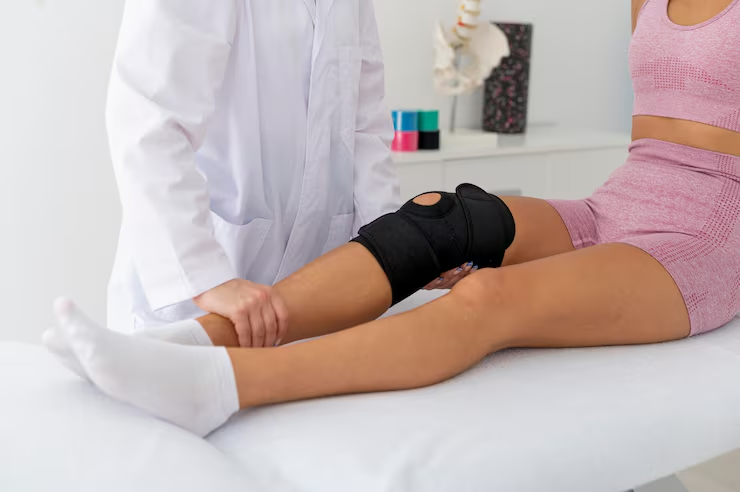
A torn meniscus is one of the most common knee injuries — causing pain, swelling, stiffness, and sometimes a locking or giving-way sensation. Meniscus repair surgery using arthroscopic techniques is a minimally invasive procedure that addresses meniscus tears effectively, preserving as much of the natural meniscus as possible. Dr. Krishna Kumar M S performs both arthroscopic meniscus repair (preserving the torn tissue) and partial meniscectomy (removing the damaged fragment) in Whitefield, Bangalore, choosing the most appropriate approach based on tear characteristics, location, and patient factors.
Preserving the meniscus wherever possible is Dr. Krishna Kumar M S's philosophy — because the meniscus plays a critical role in cushioning, load distribution, and long-term joint health.
The knee joint contains two C-shaped fibrocartilage cushions — the medial meniscus (inner) and the lateral meniscus (outer) — that sit between the femur and tibia. They distribute load across the knee joint, absorb shock, provide joint stability, and facilitate joint lubrication. Meniscus tears can occur as acute injuries — typically from twisting or squatting movements during sport — or as degenerative tears in older individuals with weakened cartilage tissue that tears under normal loading.
Arthroscopic Technique: The procedure is performed through 2–3 small portals around the knee under spinal or general anaesthesia. The arthroscope provides magnified visualization of the entire meniscus.
Tear Assessment: The tear pattern, location (vascular red zone vs avascular white zone), and tissue quality are assessed to determine the optimal treatment — repair or meniscectomy.
Meniscus Repair: For repairable tears, sutures are passed through the torn edges and tied to appose the edges together, allowing biological healing over 3–4 months. Various suture techniques (inside-out, outside-in, all-inside devices) are used depending on tear location and pattern.
Partial Meniscectomy: For irreparable tears, the damaged fragment is removed with powered shavers while preserving as much healthy meniscus tissue as possible. The procedure typically takes 30–60 minutes.
Dr. Krishna Kumar M S prioritizes meniscus preservation and applies advanced arthroscopic techniques to achieve the best outcome for every meniscus injury:
Small, stable tears in the outer vascular zone of the meniscus can sometimes heal without surgery, particularly in younger patients with good blood supply to the area. Conservative treatment with rest, physiotherapy, and anti-inflammatory medications can allow these tears to heal over 6–8 weeks. However, larger tears, bucket-handle tears causing locking, and tears in the avascular inner zone typically require surgical treatment to resolve symptoms and prevent further joint damage. Dr. Krishna Kumar M S will assess your tear on MRI and clinical examination to determine whether surgery is indicated.
Meniscus repair involves stitching the torn edges together to allow the meniscus to heal — preserving its important functions of load distribution and joint protection. This is preferred for tears in the vascular outer zone, particularly in younger patients. Partial meniscectomy involves removing the damaged torn fragment while preserving as much healthy meniscus as possible. This is used for tears in the avascular inner zone that cannot heal and has a faster return to activity. Dr. Krishna Kumar M S chooses the approach that best preserves long-term joint health.
Recovery after meniscus repair is longer than after meniscectomy because the repair needs time to heal. Protected weight-bearing continues for 4–6 weeks, followed by progressive physiotherapy through months 2–4, with return to sport typically at 4–6 months. Meniscectomy has a faster recovery — most patients return to sport within 6–8 weeks. Dr. Krishna Kumar M S will provide a specific recovery timeline based on your procedure and sport demands.
The cost of meniscus surgery in Bangalore depends on the procedure (repair vs meniscectomy), whether concomitant procedures such as ACL reconstruction are required, and the patient's specific needs. We offer transparent pricing and work with all major insurance providers. Please contact us at +91 7411295438 or book a consultation for a detailed, personalized estimate.
Don't ignore a torn meniscus. Consult Dr. Krishna Kumar M S in Whitefield, Bangalore for accurate diagnosis and expert arthroscopic treatment of your meniscus injury.
Book Your Consultation