
Welcome to Dr. Krishna Kumar M.S. – Robotic Joint Replacement Specialist
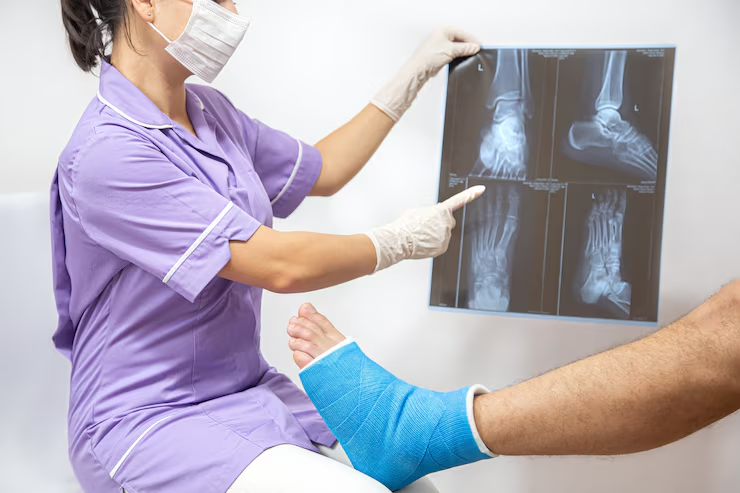
Persistent joint pain does not always mean you need a replacement. For younger patients, active adults, and individuals with early arthritis or localized cartilage damage, joint preservation surgery can reduce pain, improve function, and delay the need for artificial implants by protecting the natural joint for as long as possible.
Dr. Krishna Kumar M S offers advanced joint preservation surgery in Whitefield, Bangalore for knee, hip, and shoulder conditions including cartilage defects, meniscus injuries, labral tears, malalignment, instability, and early degenerative changes. Treatment is always customized to the exact cause of pain so the joint is repaired, realigned, or stabilized before irreversible damage progresses.
Joint preservation surgery refers to a group of procedures designed to maintain your native joint instead of replacing it. The goal is to treat the root cause of mechanical overload or tissue damage - such as cartilage wear, meniscus loss, ligament instability, labral injury, or bone malalignment - and restore healthier joint mechanics.
These procedures are especially valuable in patients who are too young for joint replacement, wish to remain highly active, or have damage limited to one part of the joint. By intervening at the right stage, Dr. Krishna Kumar M S can often slow arthritis progression, improve mobility, and help you stay active with your own joint for many more years.
Dr. Krishna Kumar M S considers joint preservation when pain is being caused by a treatable structural problem and the joint is not yet destroyed by end-stage arthritis. Surgery is commonly recommended when:
Successful preservation begins with accurate diagnosis. Dr. Krishna Kumar M S uses clinical examination, weight-bearing X-rays, MRI, and alignment analysis to determine exactly why the joint is failing and whether it can be preserved effectively.
Pre-Surgery Planning: Every case is mapped in detail to identify cartilage damage, meniscus or labral pathology, instability, and deformity. This helps determine whether arthroscopy, repair, realignment, or a combined procedure is the best strategy.
Procedure Selection: Surgery may involve minimally invasive arthroscopy, tendon or meniscus repair, cartilage restoration, or osteotomy depending on the pathology. The objective is to unload the painful area and restore more normal joint biomechanics.
Early Rehabilitation: Recovery begins immediately with swelling control, protected movement, and a structured physiotherapy program. Weight-bearing, brace use, and return to activity depend on the exact preservation procedure performed.
Recovery is highly procedure-specific, but the main goal is always the same: protect the repair while restoring strength, alignment, and movement safely. Most patients recover in stages:
Joint preservation requires sound judgment - knowing when a natural joint can still be saved and when replacement is more appropriate. Patients trust Dr. Krishna Kumar M S because each decision is based on long-term function, not just short-term symptom control.
The biggest benefit of joint preservation surgery is that it helps patients keep their natural joint while reducing pain and improving function. In appropriate cases, it can slow or delay arthritis progression and postpone the need for joint replacement by many years.
As with any orthopedic surgery, outcomes depend on the stage of damage, patient compliance with rehabilitation, and the specific procedure performed. Risks can include stiffness, incomplete pain relief, re-injury, persistent cartilage wear, or the future need for replacement if degeneration advances. Dr. Krishna Kumar M S discusses these factors clearly before surgery so your treatment plan is realistic and evidence-based.
The best candidates are patients with early arthritis, focal cartilage defects, meniscus or labral injuries, ligament-related instability, or malalignment - especially when only part of the joint is affected. Younger and active patients often benefit most because preserving the natural joint can help delay replacement for many years. A proper clinical examination and imaging workup are essential to confirm suitability.
In many suitable patients, yes - joint preservation can significantly delay the need for replacement by correcting the mechanical problem before the joint becomes severely arthritic. However, it does not reverse advanced end-stage arthritis. The goal is to preserve your natural joint and slow further damage, not to promise that replacement will never be needed in the future.
No. While athletes often seek preservation surgery to return to sport, many non-athletic patients are also ideal candidates - particularly those with early arthritis, painful joint overload, or localized tissue injury. The main deciding factor is not athletic status, but whether the natural joint still has a reasonable chance of long-term recovery if the underlying problem is corrected.
Recovery varies by procedure. Simple arthroscopic preservation procedures may allow functional recovery in 6-12 weeks, while osteotomy or complex cartilage restoration can require 3-6 months or more of protected rehabilitation. Your recovery plan depends on whether the surgery involves repair, realignment, or biologic restoration, and Dr. Krishna Kumar M S will explain the timeline in detail before surgery.
If arthritis is already advanced and the joint surfaces are globally worn out, joint preservation may no longer provide reliable benefit. In those cases, Dr. Krishna Kumar M S may recommend partial or total joint replacement instead. The strength of a specialist evaluation is knowing when preservation is worthwhile and when replacement will provide a better long-term outcome.
If you want to reduce pain and stay active without moving too quickly to joint replacement, schedule a joint preservation assessment with Dr. Krishna Kumar M S in Whitefield, Bangalore.
Book Your Consultation