
Welcome to Dr. Krishna Kumar M.S. – Robotic Joint Replacement Specialist
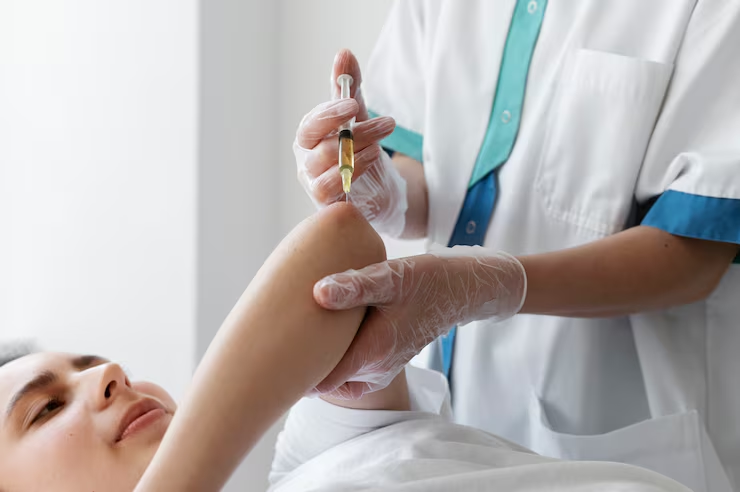
Platelet-Rich Plasma (PRP) therapy is an advanced regenerative treatment that harnesses the healing power already present within your own body. Blood contains red blood cells, white blood cells, plasma, and platelets — and platelets are far more than just clotting agents. They are packed with a rich concentration of growth factors that actively drive tissue repair and regeneration.
In PRP therapy, a small amount of the patient's own blood is processed to isolate and concentrate these platelets. The resulting platelet-rich plasma — containing 5 to 10 times the normal concentration of platelets — is then precisely injected into the damaged or painful area of the musculoskeletal system. This concentrated dose of growth factors stimulates the body's natural repair mechanisms at a cellular level, promoting tissue healing in areas that may otherwise have a poor blood supply and limited ability to self-repair.
The key growth factors found in platelets include:
Importantly, PRP therapy is not a steroid. Unlike corticosteroid injections that suppress inflammation temporarily and may weaken tissue over time, PRP actively rebuilds and regenerates damaged tissue. Because PRP is derived entirely from the patient's own blood, the risk of allergic reaction or rejection is essentially eliminated, making it one of the safest biological treatments available in orthopedic medicine today.
The PRP preparation and injection process is a carefully controlled, stepwise procedure that takes place entirely within the clinic. Each step is designed to maximise the concentration and quality of growth factors delivered to the injured tissue:
Ultrasound guidance is a key advantage in our approach to PRP therapy — it ensures that the injection is not just near the target, but precisely within the affected tissue, maximising therapeutic benefit and avoiding surrounding structures.
PRP therapy has shown clinically meaningful benefits across a wide range of musculoskeletal conditions, particularly those involving tendons, joints, and soft tissues where natural healing is slow due to limited blood supply. Dr. Krishna Kumar M S evaluates each patient individually to determine whether PRP is the appropriate treatment choice.
PRP therapy is a straightforward, minimally invasive, in-clinic procedure that takes approximately 30 to 45 minutes from start to finish. There is no need for general anaesthesia, no hospital admission, and minimal downtime. Here is what to expect on the day of your PRP injection:
Understanding the timeline of PRP recovery is important — PRP is a biological therapy that works with your body's own healing systems, and results take time to develop. This is fundamentally different from a steroid injection that suppresses pain quickly but does not repair the underlying tissue.
Not all PRP treatments are equal — the quality of preparation, the precision of delivery, and the appropriateness of patient selection all determine whether PRP produces meaningful clinical benefit. Dr. Krishna Kumar M S brings a rigorous, evidence-based approach to every PRP treatment offered at Medicover Hospital Whitefield.
The number of PRP injections required depends on the condition being treated and its severity. For mild to moderate knee osteoarthritis, a single injection may provide adequate benefit. For chronic tendinopathies such as tennis elbow or patellar tendinitis, a series of 2 to 3 injections spaced 4 to 6 weeks apart typically produces better and more lasting results. Sports muscle injuries may require just one well-timed injection combined with physiotherapy. Dr. Krishna Kumar M S will assess your condition and recommend the appropriate number of sessions after your initial evaluation and review of your imaging.
The injection itself is performed after applying local anaesthetic to the skin, which minimises discomfort during the procedure. The blood draw is similar to a routine blood test and causes only brief, mild discomfort. After the injection, it is common and normal to experience mild soreness and local swelling at the injection site for 2 to 3 days — this is part of the healing response triggered by the growth factors and should not be suppressed with anti-inflammatory medications. Most patients find this early discomfort tolerable and manageable with paracetamol and ice packs if needed. By one to two weeks after the injection, the soreness typically resolves and the gradual improvement in the underlying condition begins.
The duration of benefit from PRP therapy varies by condition and individual patient factors. For knee osteoarthritis, clinical studies report that a significant proportion of patients experience meaningful pain relief and functional improvement for 12 to 18 months, and in some cases longer, particularly when combined with physiotherapy and lifestyle modifications. For tendinopathies such as tennis elbow, results from PRP have been shown in studies to be superior to corticosteroids at 12 months, with a proportion of patients achieving long-term resolution. Maintaining a healthy weight, continuing appropriate strengthening exercises, and attending follow-up appointments contributes significantly to sustaining PRP results over time.
PRP therapy is not appropriate for every patient. Patients with active infection at the injection site, blood disorders affecting platelet function, platelet counts below 105,000 per microlitre, haemoglobin below 10 g/dL, or those on anticoagulant medications that cannot be safely paused are generally not suitable candidates. Patients with end-stage arthritis (bone-on-bone joint destruction) typically do not benefit significantly from PRP and are better served by joint replacement surgery. Patients with active cancer, metastatic disease, or a personal history of cancer should discuss PRP carefully with their treating oncologist before proceeding. Dr. Krishna Kumar M S performs a thorough clinical assessment and, where indicated, requests blood investigations to confirm suitability for PRP therapy before proceeding with the injection.
If you are suffering from knee arthritis, a stubborn tendon injury, tennis elbow, or a sports-related muscle tear, PRP therapy may help you recover faster and more completely — using your body's own healing intelligence. Consult Dr. Krishna Kumar M S in Whitefield, Bangalore to find out whether PRP is the right treatment for your condition.
Book Your Consultation