
Welcome to Dr. Krishna Kumar M.S. – Robotic Joint Replacement Specialist
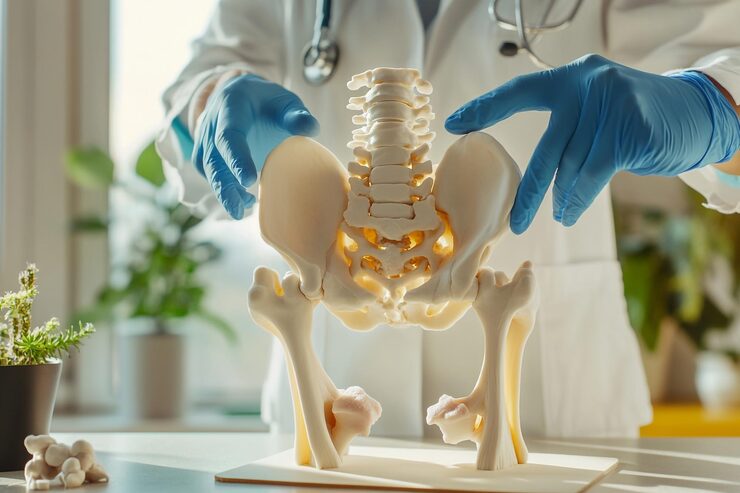
Hip pain that limits your ability to walk, sleep, or perform daily activities can be debilitating. Hip replacement surgery, also known as total hip arthroplasty (THA), is one of the most successful orthopedic procedures for eliminating chronic hip pain and restoring normal function. Dr. Krishna Kumar M S performs advanced hip replacement surgeries in Whitefield, Bangalore, offering a full spectrum of procedures from total hip replacement to robotic-assisted and minimally invasive approaches.
Whether your hip pain stems from severe osteoarthritis, avascular necrosis, or a previous hip fracture, Dr. Krishna Kumar M S provides a personalized, evidence-based treatment plan designed around your unique anatomy, lifestyle, and goals.
Hip replacement surgery involves removing the damaged or arthritic surfaces of the hip joint — the femoral head (ball) and the acetabulum (socket) — and replacing them with high-quality artificial implants. These implants are made from durable materials including ceramic, cobalt-chrome metal alloys, and medical-grade polyethylene, engineered to replicate the smooth, pain-free movement of a healthy hip joint.
The procedure eliminates bone-on-bone friction, corrects hip deformity, and restores proper biomechanics — allowing patients to return to walking, climbing stairs, and active living without the chronic pain that limited them before surgery.
Dr. Krishna Kumar M S recommends hip replacement when conservative treatments no longer provide adequate relief. Signs that you may need hip replacement surgery include:
Pre-Surgery Evaluation: A thorough workup including hip X-rays, MRI if needed, blood tests, and cardiac evaluation. Implant size and approach (posterior or anterior) are planned based on your anatomy.
Anaesthesia: Performed under spinal or general anaesthesia, the procedure typically lasts 60–90 minutes.
Surgical Steps: Dr. Krishna Kumar M S uses either the posterior or anterior approach to access the hip joint, removes the damaged femoral head and acetabular cartilage, prepares the bone to accept the implant components, then secures the stem (femoral component) and cup (acetabular component) into their optimal positions. A ceramic, metal-on-polyethylene, or oxinium bearing couple is chosen based on your age and activity level.
Early Mobilization: Physiotherapy begins on the same day of surgery, with patients standing and taking their first steps within hours of the procedure.
Patients from Whitefield, Marathahalli, Varthur, Hoodi, and across Bengaluru choose Dr. Krishna Kumar M S for hip replacement surgery because of his surgical expertise, patient-centered approach, and commitment to outstanding outcomes:
Hip replacement surgery has an outstanding success rate — over 95% of patients report significant pain relief and improved function following surgery. Modern hip implants are designed to last 20–25 years with proper care and activity management. Dr. Krishna Kumar M S follows rigorous infection prevention protocols, DVT (deep vein thrombosis) prophylaxis, and structured rehabilitation to minimize complications and maximize long-term implant performance.
Potential risks — including infection, blood clots, dislocation, and leg length discrepancy — are thoroughly discussed during your pre-operative consultation, along with the steps taken to prevent each complication.
The cost of hip replacement surgery in Bangalore depends on the type of procedure (total, partial, or robotic), implant brand and material (ceramic, metal-on-poly, or oxinium), and the patient's overall medical requirements. We offer transparent pricing and work with major insurance providers. Please contact us at +91 7411295438 or book a consultation for a detailed, personalized estimate.
Modern hip implants are designed to last 20–25 years or more with appropriate activity management. The longevity depends on the patient's weight, activity level, implant type, and the precision of surgical placement. Robotic-assisted hip replacement helps optimize component positioning, which further extends implant life and reduces the likelihood of revision surgery.
A total hip replacement replaces both the femoral head (ball) and the acetabulum (socket), making it ideal for arthritis affecting the entire hip joint. A partial hip replacement (hemiarthroplasty) replaces only the femoral head and is most commonly used for hip fractures in elderly patients where the socket remains intact. Dr. Krishna Kumar M S determines the appropriate procedure based on your diagnosis, age, and X-ray findings.
Most patients begin walking with a walker on the same day as surgery, within a few hours of the procedure. By week 2, most patients are walking short distances independently. By 6 weeks, most patients walk without a support aid. Full independent walking is typically achieved within 6–12 weeks, with continued improvements in strength and endurance over the following months.
Robotic-assisted hip replacement offers significant advantages over conventional surgery, including more precise implant positioning (within 1–2 mm), accurate restoration of leg length equality, reduced soft tissue trauma, and potentially faster recovery. Studies show robotic hip replacement results in lower revision rates and higher patient satisfaction scores. Dr. Krishna Kumar M S uses advanced robotic technology to deliver consistently superior outcomes for his hip replacement patients in Whitefield, Bangalore.
Take the first step toward a pain-free life. Consult Dr. Krishna Kumar M S for a personalized evaluation of your hip condition and discover if hip replacement surgery is right for you.
Book Your Consultation