
Welcome to Dr. Krishna Kumar M.S. – Robotic Joint Replacement Specialist
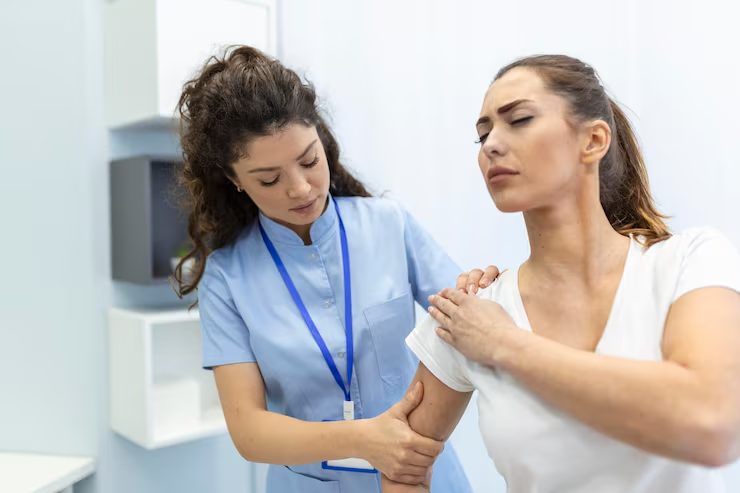
Shoulder pain, weakness, and limited movement can significantly affect your quality of life — whether you're an athlete, a working professional, or someone dealing with a long-standing shoulder problem. Shoulder arthroscopy is a minimally invasive surgical procedure that allows Dr. Krishna Kumar M S to diagnose and treat a wide range of shoulder conditions through tiny incisions, using a small camera (arthroscope) and precision instruments. Dr. Krishna Kumar M S performs shoulder arthroscopy in Whitefield, Bangalore for conditions including rotator cuff tears, SLAP lesions, shoulder impingement, and instability.
Compared to open shoulder surgery, arthroscopic procedures offer faster recovery, smaller scars, and less post-operative pain — making it the preferred approach for most shoulder conditions that require surgical intervention.
Shoulder arthroscopy involves making 2–4 small portal incisions around the shoulder joint through which an arthroscope (a thin camera with a light) and specialized instruments are introduced. The camera transmits magnified, high-definition images of the shoulder joint interior to a monitor, allowing the surgeon to precisely identify and treat damage to the tendons, labrum, cartilage, and other structures. The procedure is performed under general anaesthesia, typically in the beach chair or lateral decubitus position.
Patient Positioning: You will be placed in either the beach chair position (sitting upright) or lateral decubitus position (side-lying), depending on the surgeon's preference and the procedure being performed.
Portal Creation: Two to four small incisions (5–10 mm) are made around the shoulder. The arthroscope is introduced through the posterior portal for visualization, and working instruments are introduced through additional portals.
Joint Distension: Sterile fluid is continuously pumped into the shoulder to expand the joint space and provide clear visualization of all internal structures.
Surgical Treatment: Dr. Krishna Kumar M S performs the required repair — rotator cuff suture anchor fixation, labral reattachment, bony spur removal, or capsular release — under direct arthroscopic visualization. The procedure typically takes 45–90 minutes depending on the complexity.
Dr. Krishna Kumar M S brings specialized arthroscopic expertise and a patient-first approach to every shoulder case:
Shoulder arthroscopy typically takes 45 to 90 minutes depending on the procedure being performed. Subacromial decompression or bicep tenotomy may take 45–60 minutes, while rotator cuff repair or Bankart repair for instability may take 60–90 minutes. Dr. Krishna Kumar M S will give you an accurate time estimate during your pre-operative consultation.
The procedure itself is performed under general anaesthesia, so you will not feel anything during surgery. Post-operatively, most patients experience moderate shoulder discomfort for the first 3–7 days, effectively managed with prescribed pain medications. Because the incisions are very small and muscle damage is minimal, shoulder arthroscopy causes significantly less pain than open shoulder surgery. Most patients find their pain well-controlled within the first week.
Recovery time depends on the procedure performed. Subacromial decompression allows return to light activities within 4–6 weeks. Rotator cuff repair or Bankart repair typically require 4–6 months for full recovery and return to sport or heavy overhead work, as the repaired tendons and labrum need time to heal securely to the bone. Dr. Krishna Kumar M S provides a detailed, personalized recovery protocol from the day of your surgery.
Yes — arthroscopic rotator cuff repair is the gold standard surgical treatment for full-thickness rotator cuff tears. Dr. Krishna Kumar M S uses suture anchors to reattach the torn tendon back to its footprint on the humeral head under arthroscopic visualization. The procedure achieves excellent healing rates, with most patients experiencing significant pain relief and restoration of shoulder strength and movement. Partial-thickness tears may be treated with debridement or repair depending on tear size and patient factors.
Don't let shoulder pain limit your life. Consult Dr. Krishna Kumar M S in Whitefield, Bangalore for expert arthroscopic assessment and targeted treatment of your shoulder condition.
Book Your Consultation